

TEXT: Drew Perlmutter | PHOTOS: JEFF STOCKWELL
cout© trucks belong anywhere. They were designed, engineered, and advertised to do such. And by now they’ve been just about everywhere. If you own one or have had one in your life, chances are the truck is a vessel for memories. Work, play, vacations, adventures or just family commuting—an old Scout rig often represents nostalgia. “The good ‘ol days.”
Original Scout vehicle ads from half a century ago perfectly sold the capabilities and possibilities. Encouraging a departure from the pavement and an expedition into the natural world. Hiking, fishing, farm work—sure.
But take a look at this Scout II™ ad from 1972. They penned it perfectly “the Two Family Car.” A car “letting you be two families in one (weekday and weekend).”
Scout trucks and trails went hand in hand, but the trucks also fit a “city-lifestyle” perfectly. The ad continues:
“All week long the Scout II works just like the rest of your weekday family—going to the station, supermarket, cleaners and school. And that’s where the fold down rear seat for extra carrying space comes in mighty handy. Of course, so does the smooth ride and optional creature comforts like automatic transmission, air conditioning, power steering and power brakes.”
Creature comforts indeed for a family that wants it all. Gian Paolo Lombardo and his family were no exception.
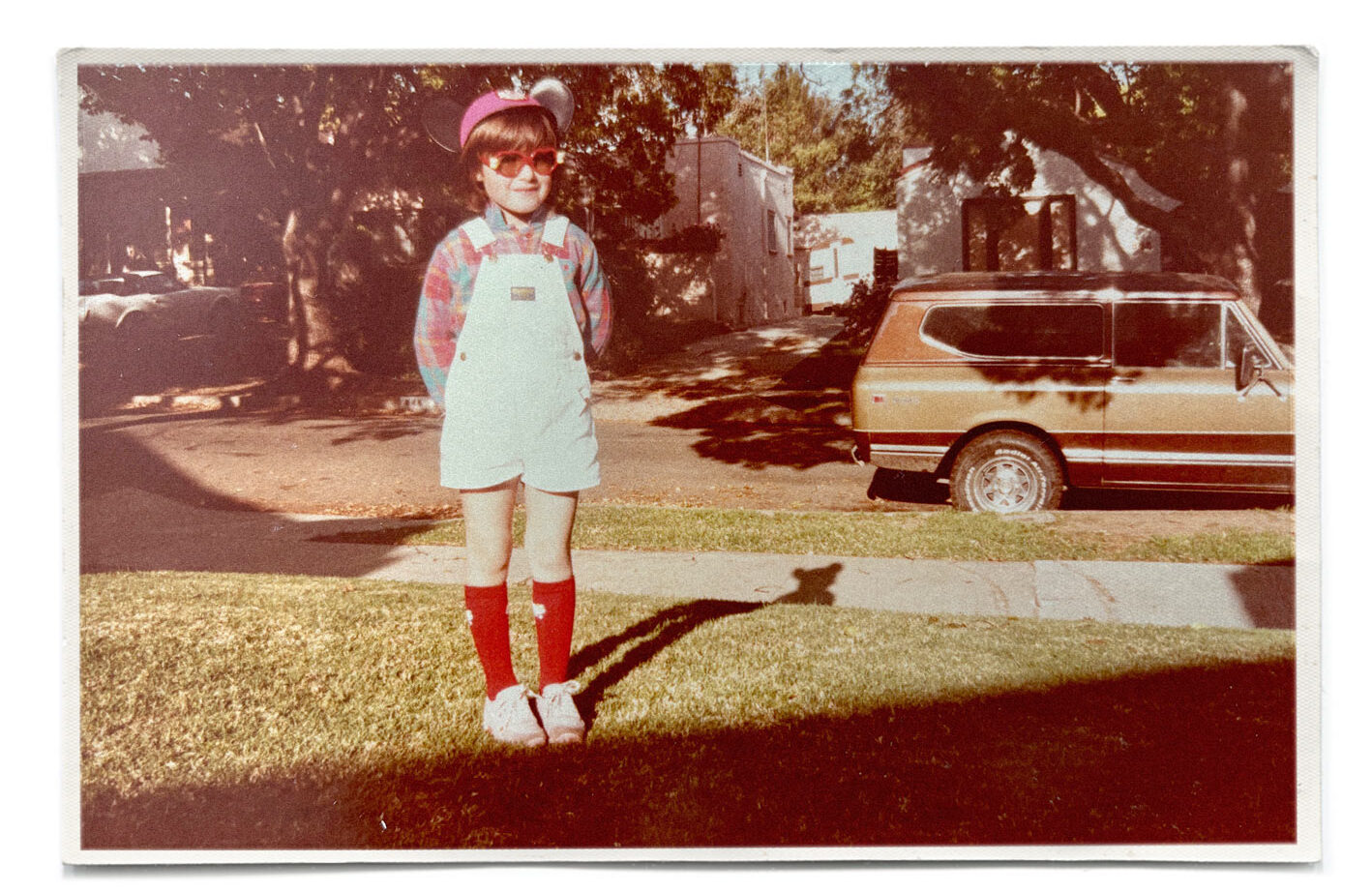
Flashback to Southern California in the 1980s—Pacific Palisades in the Los Angeles area, Veronica Lombardo (aka Vern, seen above) was a lively kid growing up alongside the sand and surf. Many of Veronica’s childhood memories are accompanied by her father’s 1973 Scout II. The truck didn’t enter her life at a single moment, rather it always existed alongside it.
Her earliest memories aren’t of the truck itself, but of where it took her and her family. Sitting between the front seats, too small to even see over the hood, dogs pacing eagerly in the back, rear hatch swung open. The destination was usually the same: the beach. In the early ’80s, you could still drive directly onto the sand in Pacific Palisades, practically the backyard for the Lombardo’s. Bonfires flickered at dusk, dogs ran free, kids too. The Scout truck carried it all—family, friends, and gear. The scene could’ve been an ad itself, perfectly capturing the spirit of the truck.
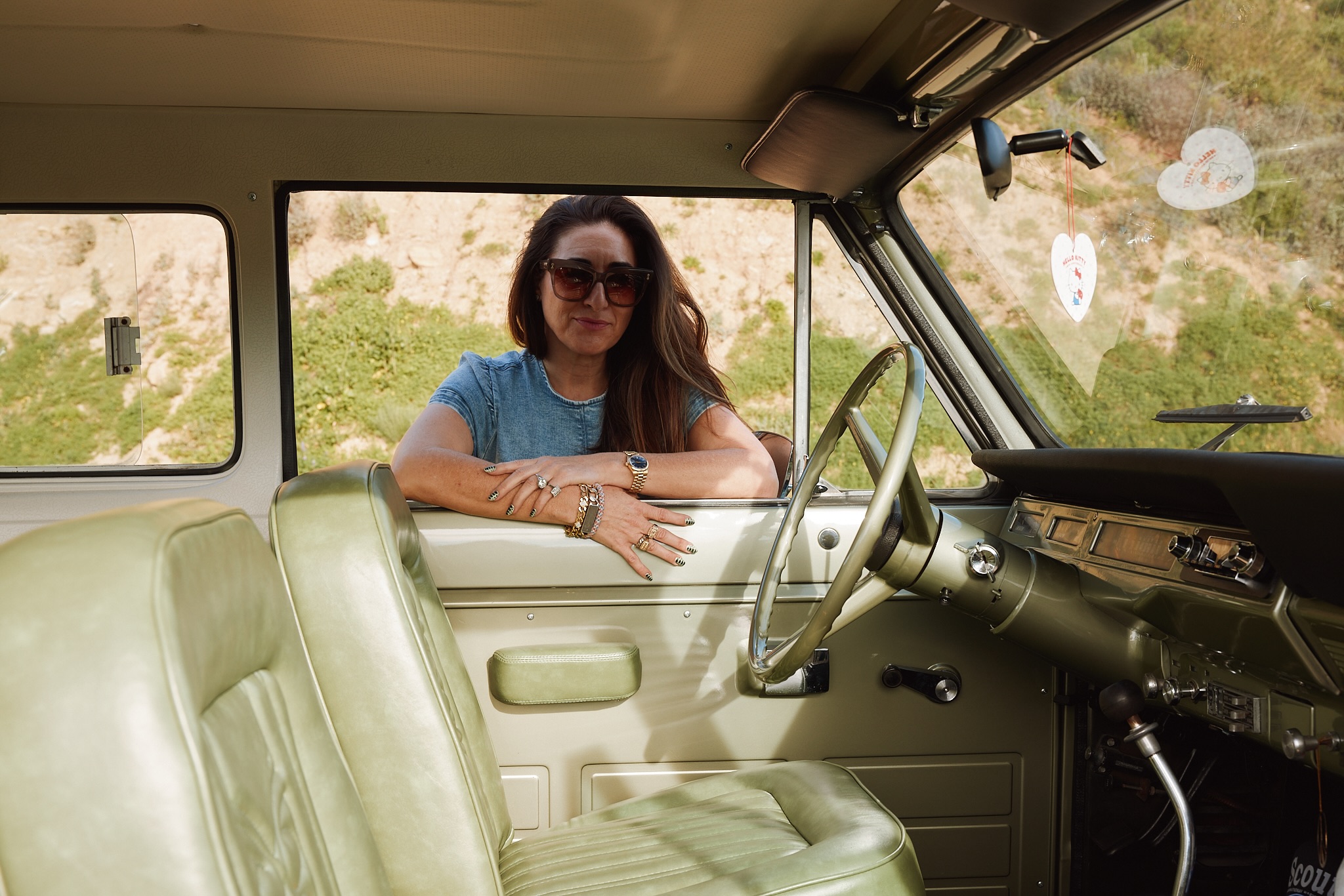
As Veronica grew older, the rituals evolved around the Scout II. She could now sit on her father’s lap while he guided the wheel, steering the truck’s big tires the final few feet up the driveway with her small hands. The truck wasn’t treated like something precious, rather it was trusted. Used. Relied upon. As any Scout rig should be.
That trust defined its role in the Lombardo household. The Lombardo’s consider themselves “car people”, so they were indeed enthusiasts of the vehicle. Her father—Gian Paolo Lombardo—hailed from Italy; cars were in his blood. While other cars came and went, the Scout stayed. He trusted the truck. It was the dog car. The errand car. The weekend Pacific Coast Highway cruiser. “Let’s just take the Scout” was more or less their motto.
After getting her license, Vern would bargain with her dad for the chance to take the Scout truck to school. The kids who knew, knew—it was cool. And in high school, being cool is currency. Especially in Los Angeles, where what you drive says everything before you ever say a word.
It was the dog car. The errand car. The weekend Pacific Coast Highway cruiser. “Let’s just take the Scout” was more or less their motto.
And remember it’s Los Angeles in the ‘80s and ‘90s. Seeing another Scout vehicle felt like spotting a unicorn. In a city where Scout trucks were rare, it stood apart without trying. It wasn’t part of a trend. It was simply the Lombardos’ truck.
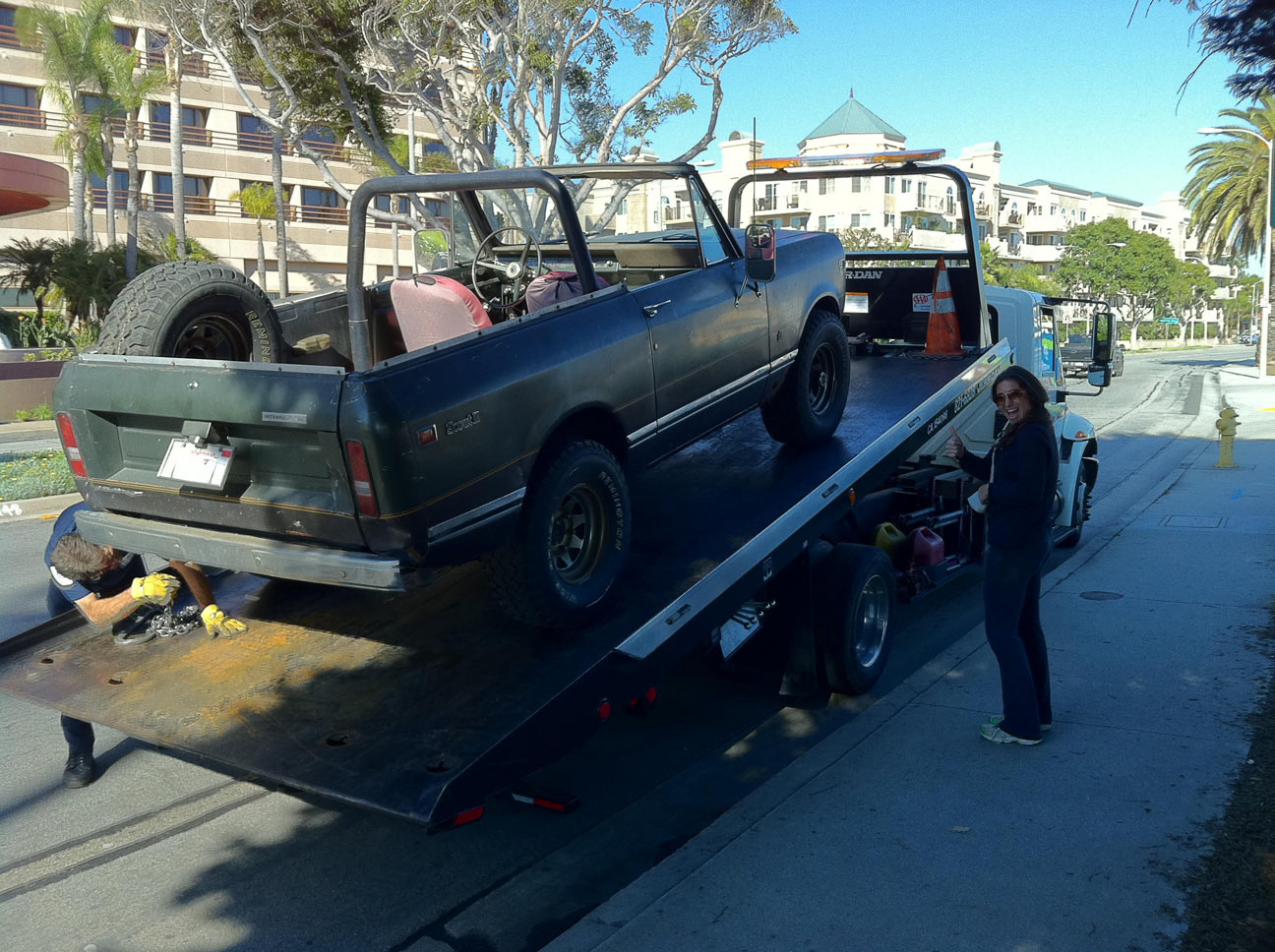
Eventually, life shifted—as it does. Maintenance on the Scout II became sporadic. The truck was driven less and less. Over the years, her father’s eyesight slowly declined, and the Scout rig quietly bore the evidence; small bumps, scrapes, misjudged reverses, and scars accumulated. Time settled in. Dust followed. Rust crept quietly along seams and panels. Nothing dramatic ended its chapter as a daily vehicle. It simply paused.
For Veronica, the truck was never forgotten. She’s an only child, a first-generation American. She’s a collector by nature, drawn to objects that carry history and meaning, having a care for sentimentalism. The Scout II wasn’t just a vehicle, it was a physical record of her family, her childhood, and most importantly, her father.
When Veronica’s father passed in 2019, the truck’s importance sharpened.
Restoring it became more than a project; it became an act of preservation. Of respect. Of continuity. A chance to relive memories.
And that intention guided every decision. Period-correct materials. Original IH parts wherever possible. Salvaged body panels to carefully correct any damage. No LED lighting. No modern reinterpretations. Vinyl upholstery instead of leather, because leather wasn’t offered in ’73. A monochrome interior and exterior, because Scout trucks of that era weren’t two-tone. The carpet color matches the body color, just as it would have decades earlier. Attention to detail is also a Lombardo trait.
The only modern update came with the radio. When the original AM/FM cassette unit proved beyond repair, Vern chose a RetroSound® replacement that kept a period-correct look while allowing her to blast old-school hip-hop and rap, R&B, and soul.
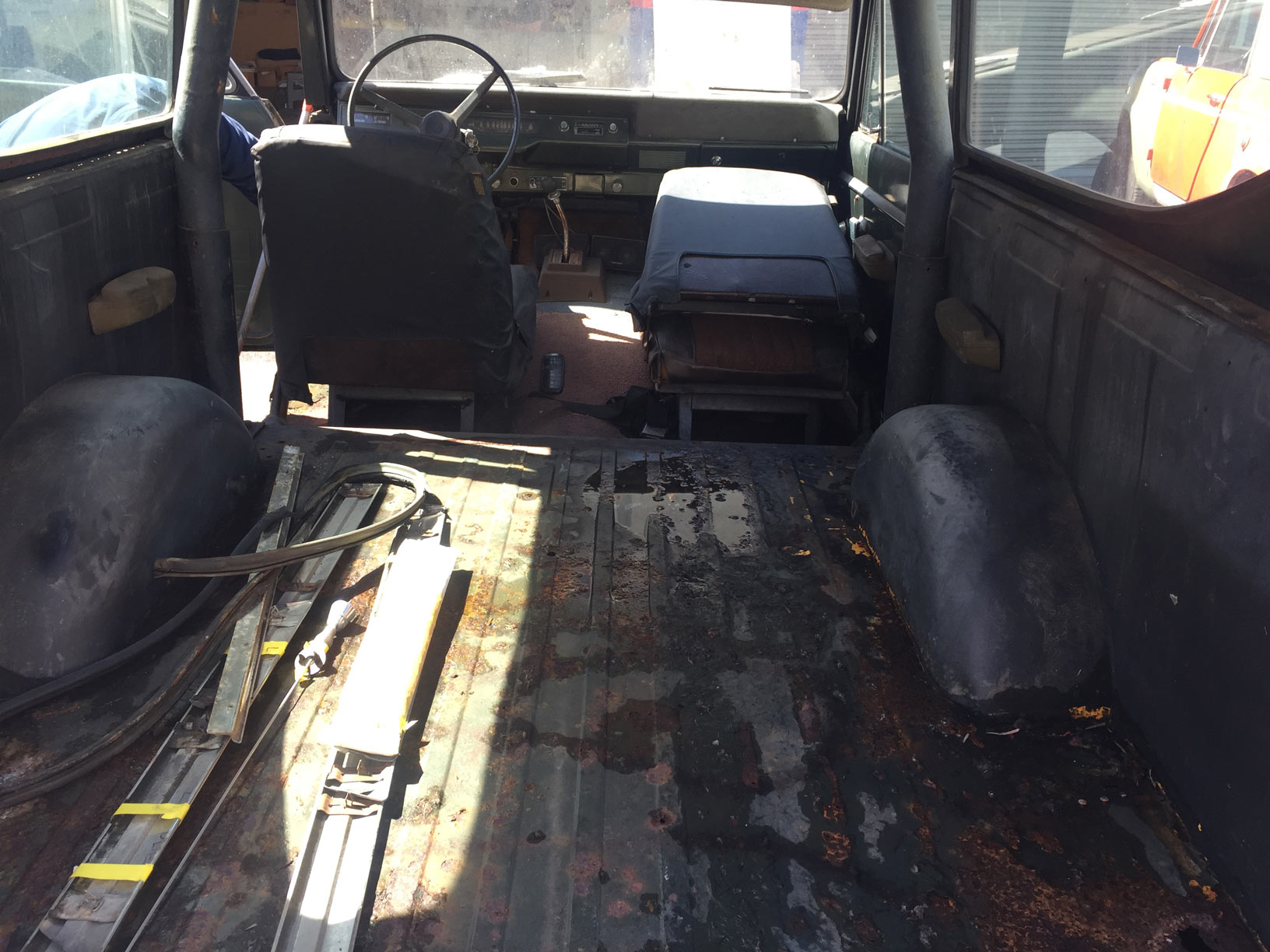
But not everything came easily. The headliner was particularly challenging because the original perforated plywood no longer exists. Rather than abandon the idea, she found an alternative that echoed its function and appearance—an homage rather than a compromise.
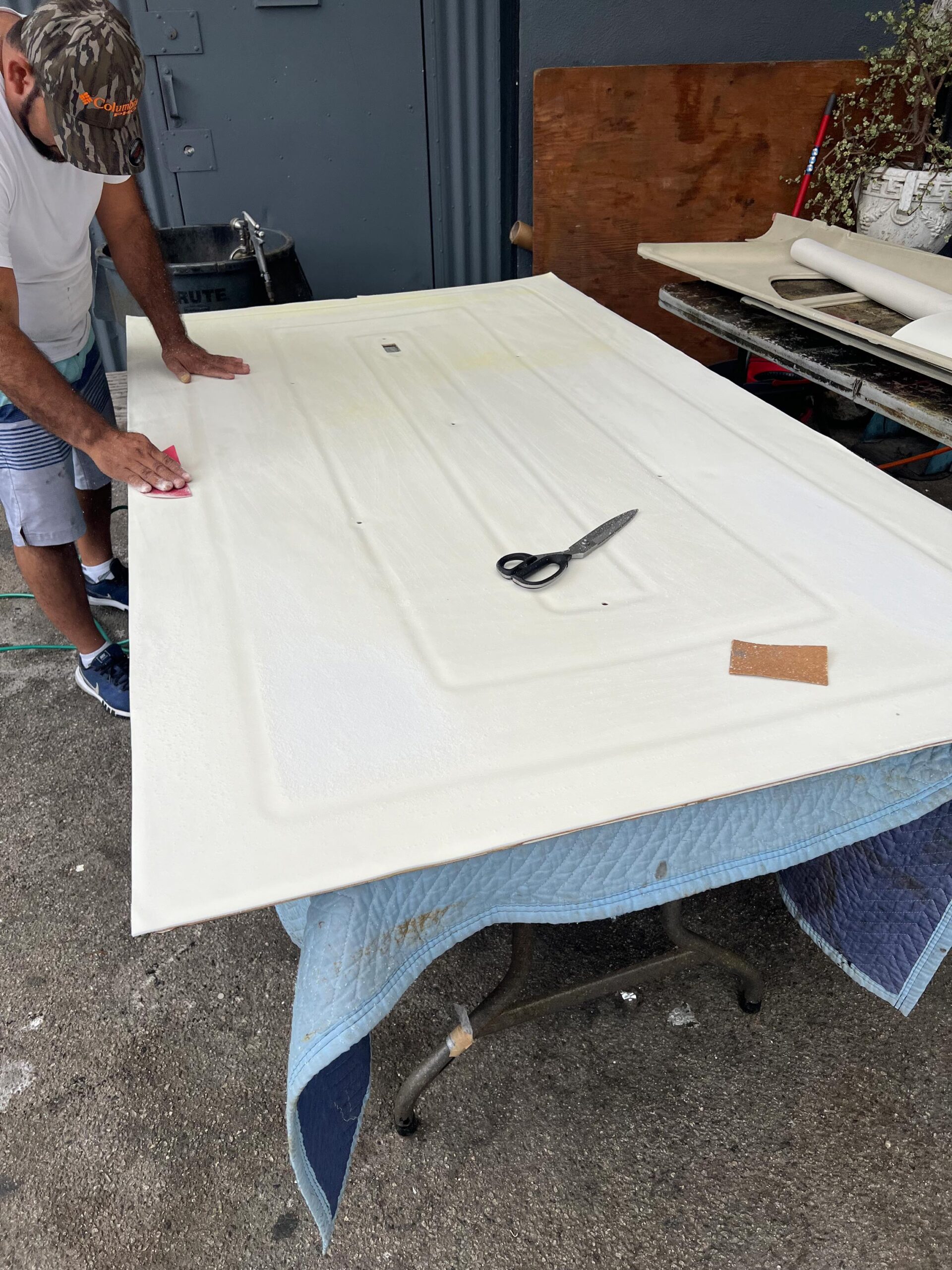
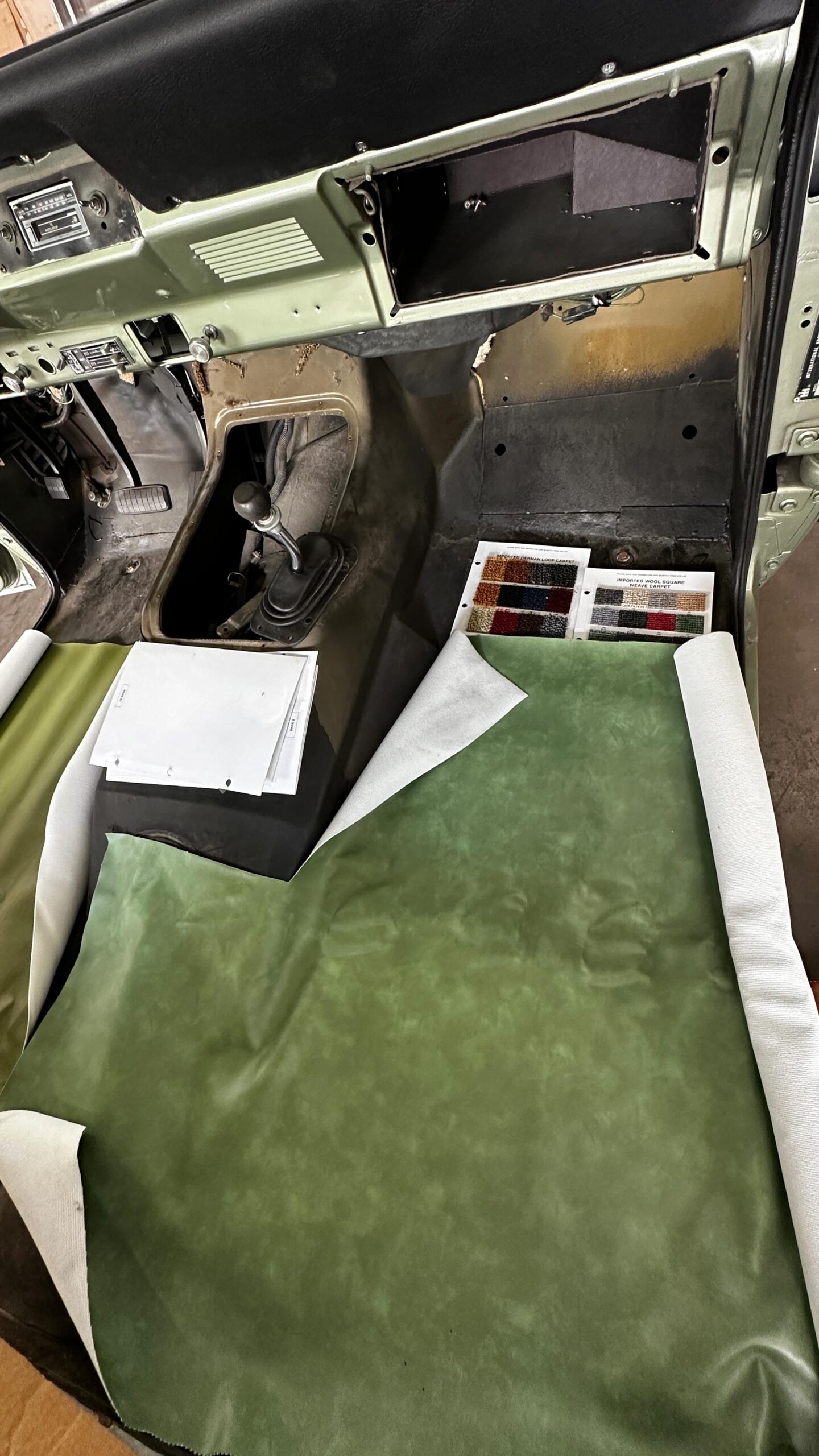
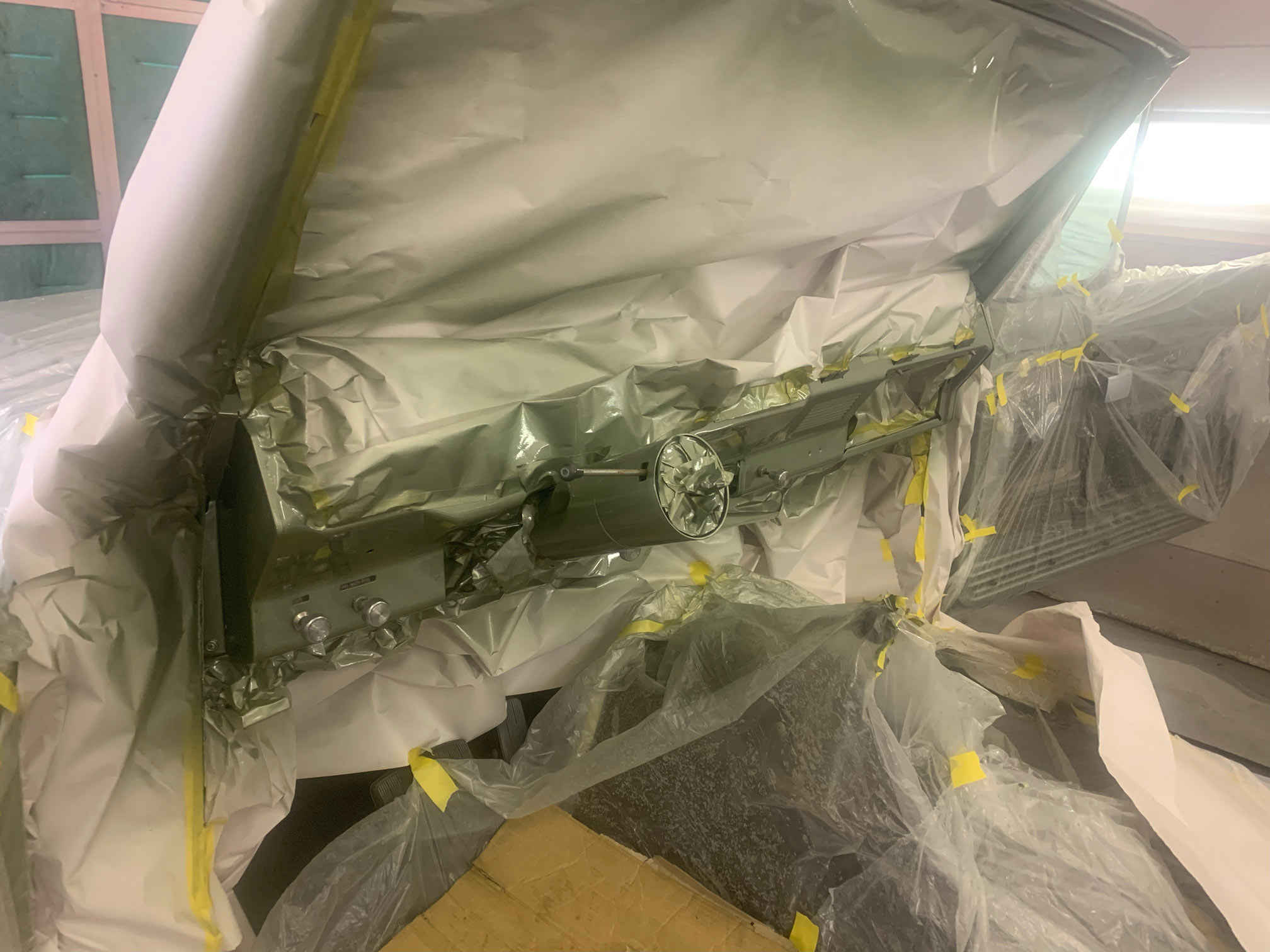
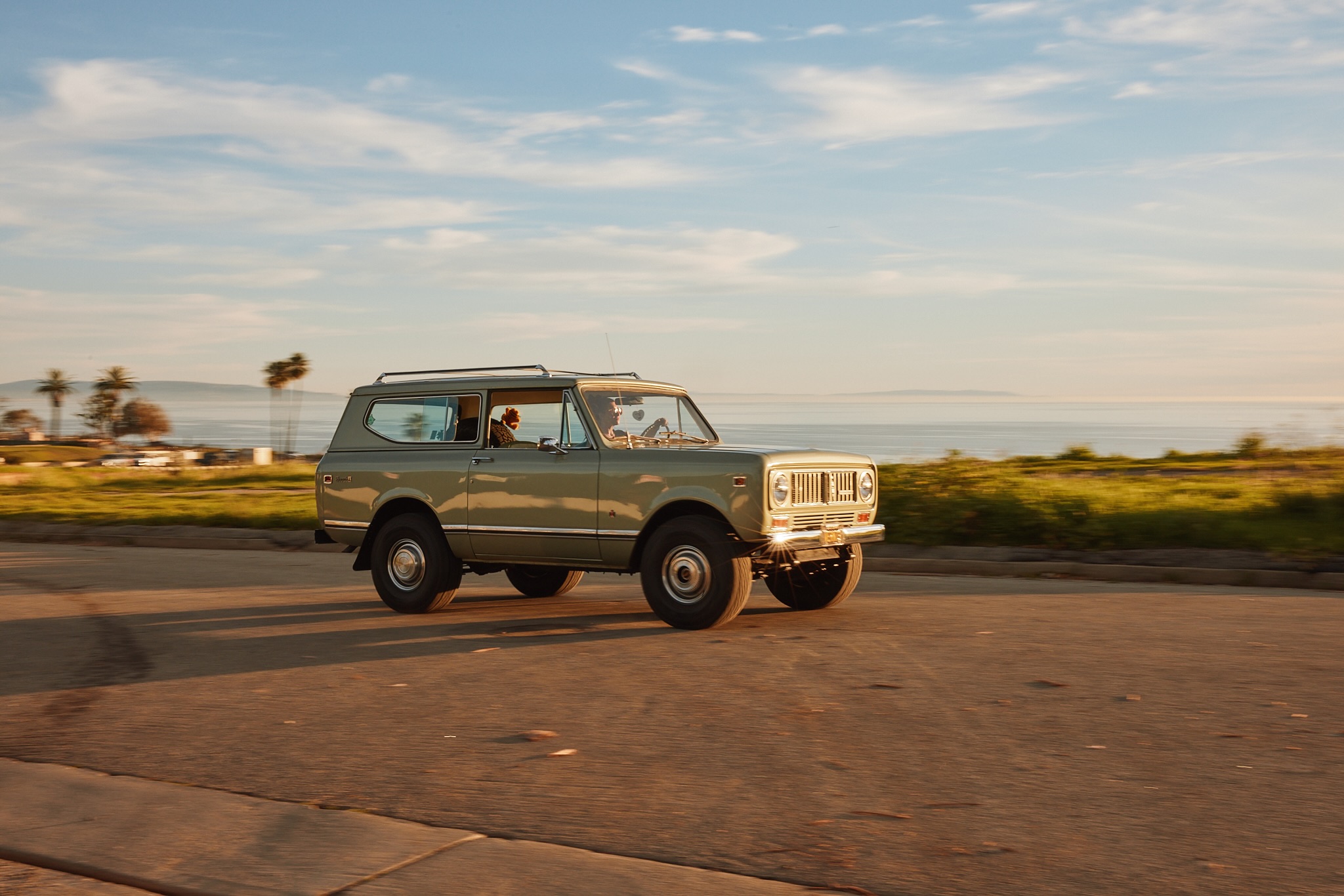
Veronica eventually found the right partner in Karol’s General Garage, a small Glendale shop with deep roots in International Harvester history. Here she met John, whose father was not only a former IH mechanic himself, but also an employee of the company in the early days. Coincidentally, John just so happened to drive a ‘73 Scout II as well.
Veronica shared her mission of reviving her truck to its former glory— “I want it looking like it just came off the line in ’73.” But this was more than a simple restoration. She told John her life story with the truck, how integral it was to her father’s life, and how meaningful the project now was. Vern’s vision immediately resonated with him. He listened and understood. Between his personal ties to the brand and his father’s memory and legacy with the company, the project made sense. Veronica now entrusted John and his team with the project.
The work was comprehensive. Panels were replaced rather than patched. A new roof was sourced rather than salvaging the damaged roof. Almost every IH source left in business was used to find parts. Paint was laid down in-house in beautiful “Mayan Mist,” an optional color for 1973. Mechanical systems were sympathetically refreshed, but the engine stayed together. It was a runner after all.
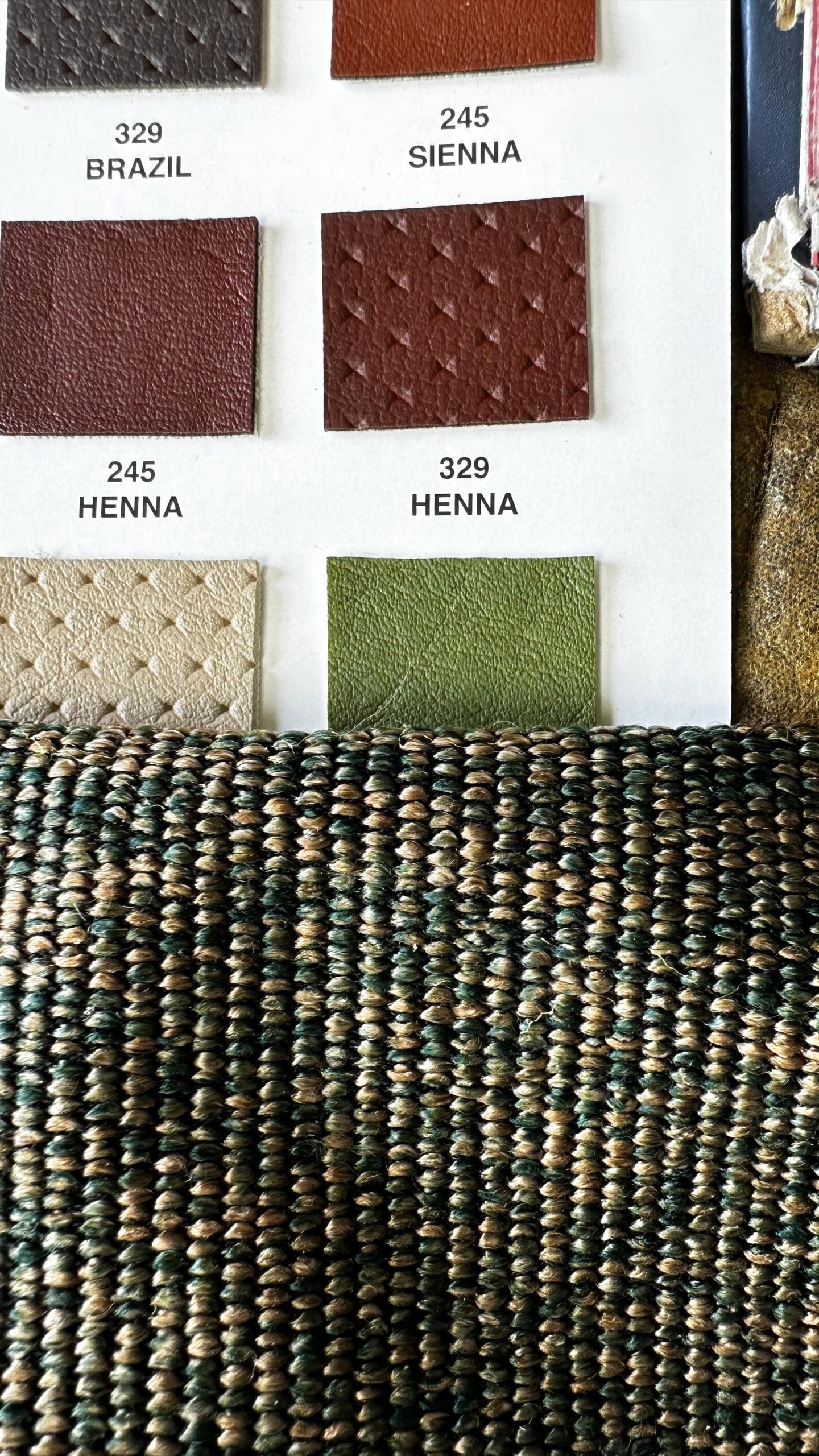
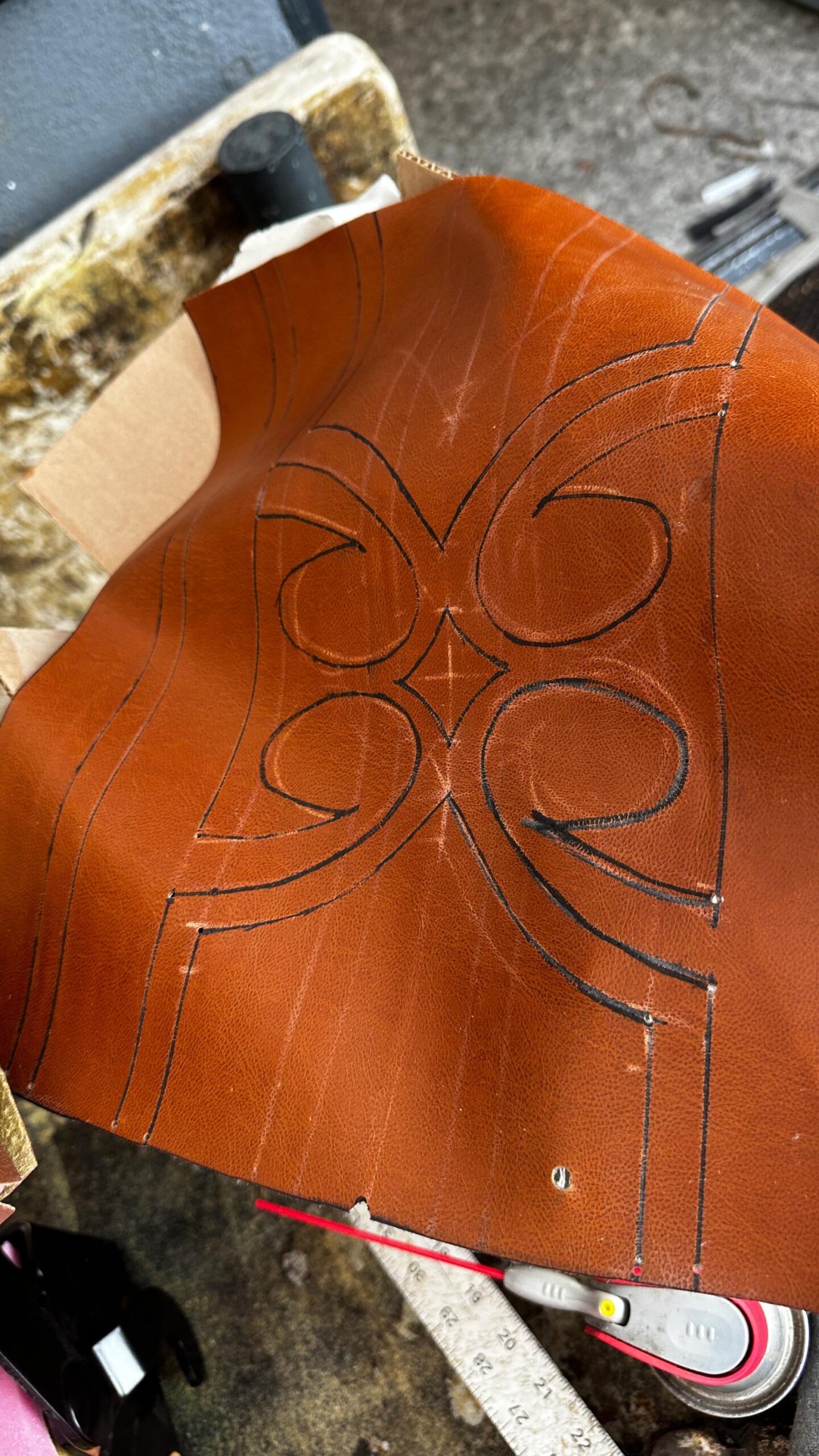
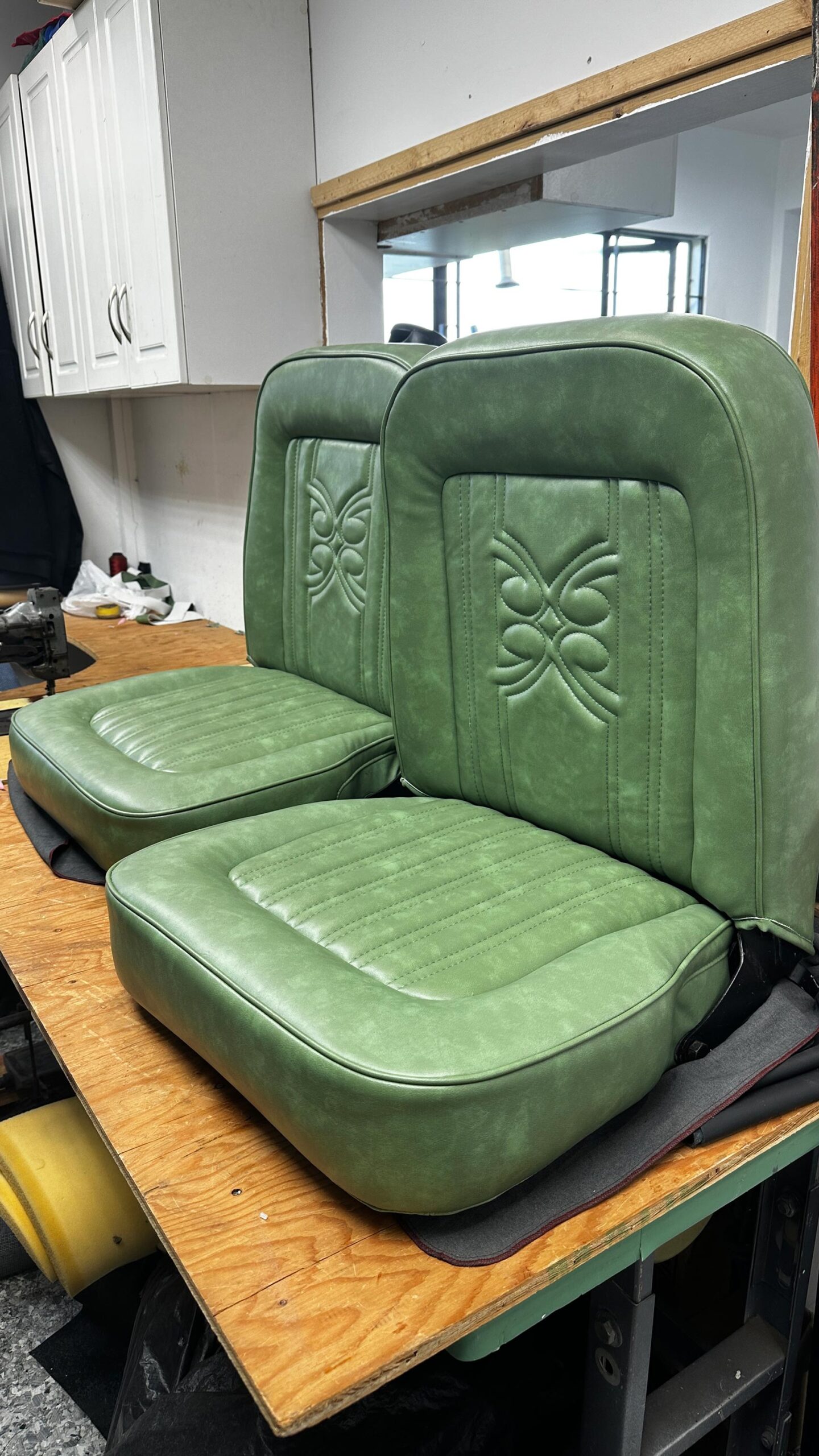
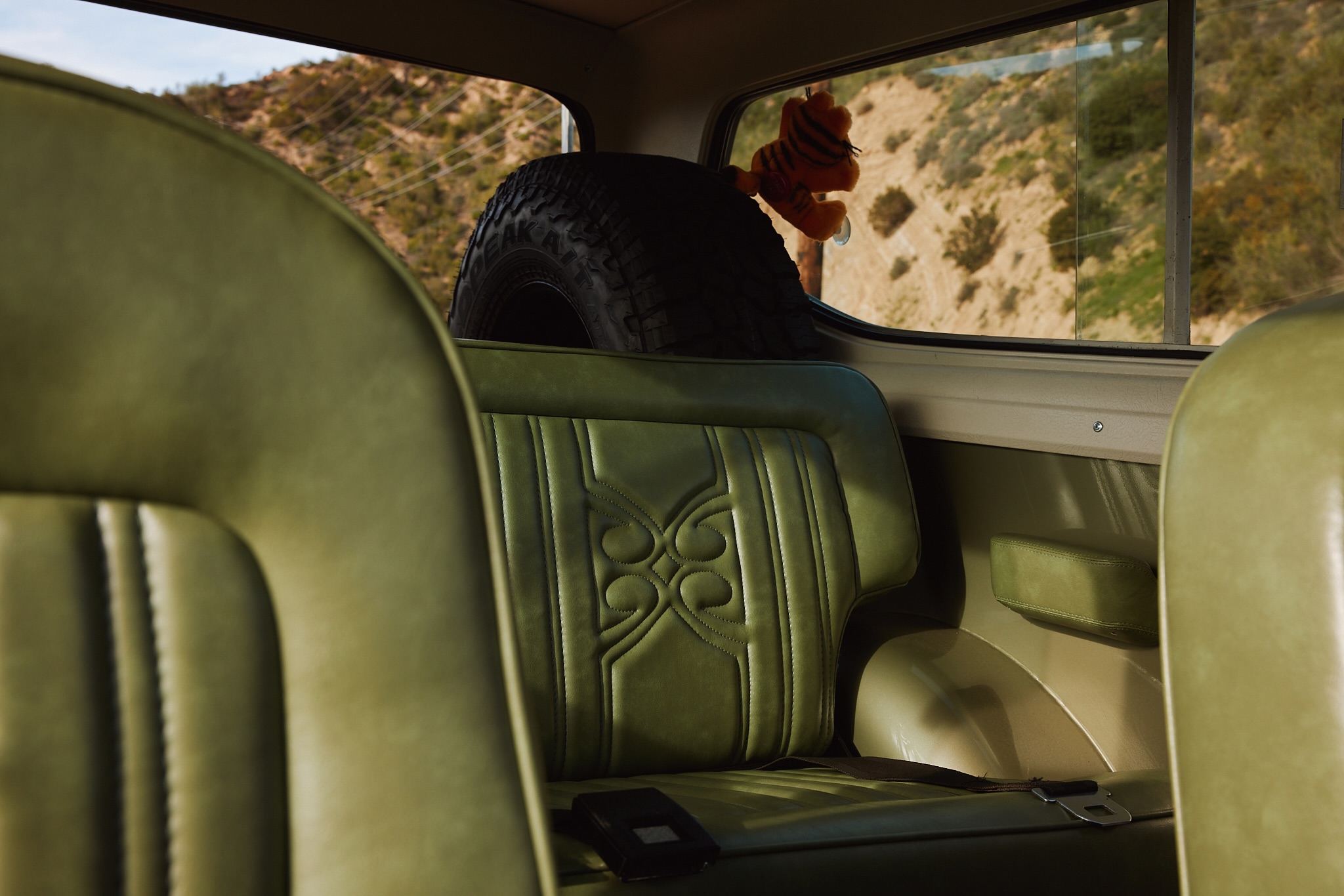
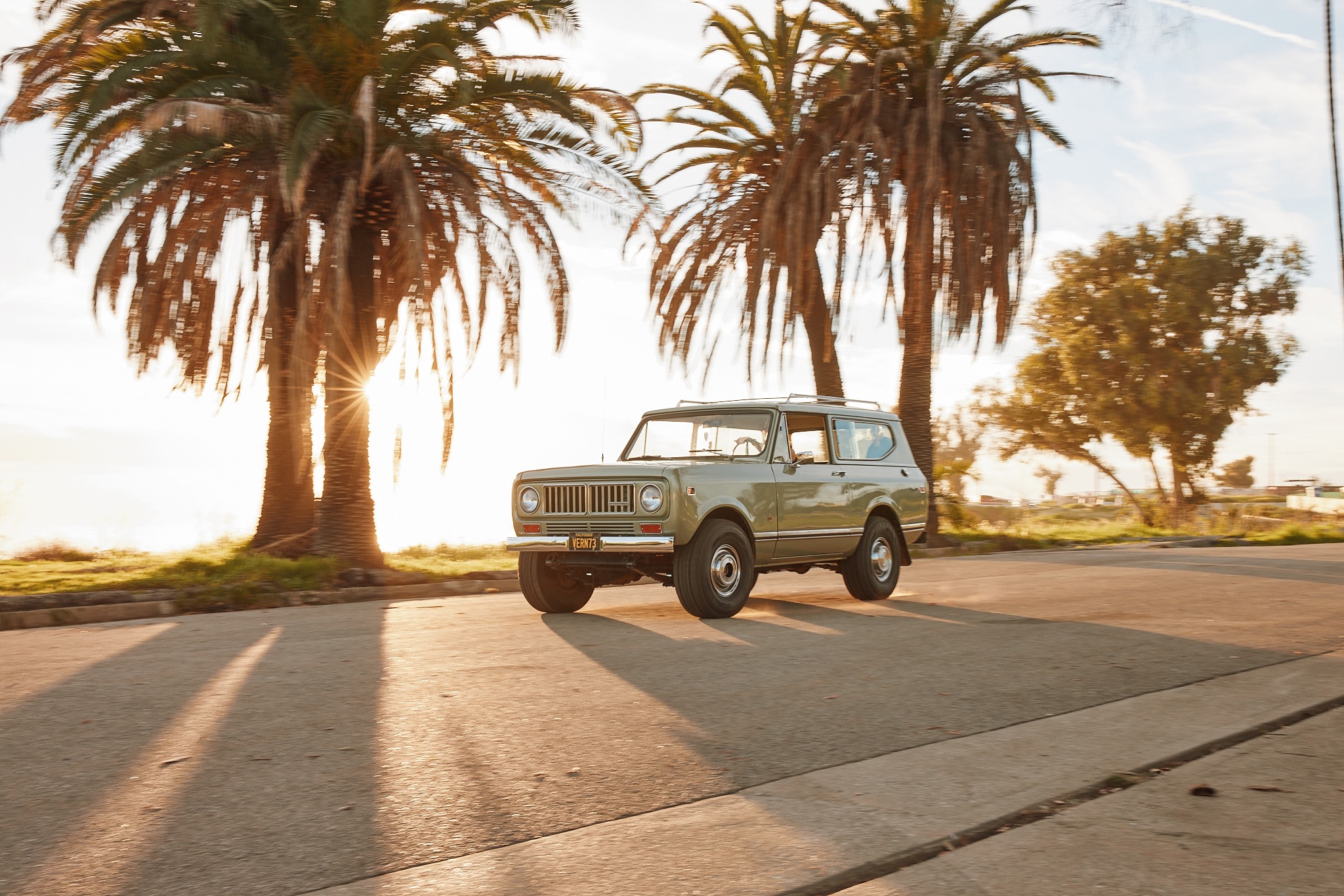
The interior demanded the same discipline. Before coming to the United States from Italy, the Lombardo family‘s roots were in the leather-goods manufacturing business. Veronica’s family history continued to set her standards. This meant quality wasn’t optional—details mattered.
Prior to the restoration officially beginning, Veronica had tucked a business card from Bill Dunn Upholstery into her Scout truck notebook. Here she tracked the truck’s oil changes, small repairs, and parts purchases over the years. During the restoration, Veronica joined The Motoring Club in Los Angeles, and by chance the shop next door was Bill Dunn Upholstery. Another moment of kismet in the truck’s story that just felt right, continuing to lead her in the right direction for this project.
When original seat patterns required obsolete machines, her upholsterer recreated the patterns by hand, drawing them from archival photos and building them stitch by stitch.
And though this cost more, she paid it. Because this wasn’t about resale value or trends. It was about doing right by the truck—and by her father. About preserving and reliving those memories.
The result is a Scout truck that doesn’t shout. It doesn’t posture. It doesn’t pretend to be something it isn’t. It simply is. Honest. Correct. Whole. Sentimental. And most importantly, it’s back driving the city streets of Los Angeles.
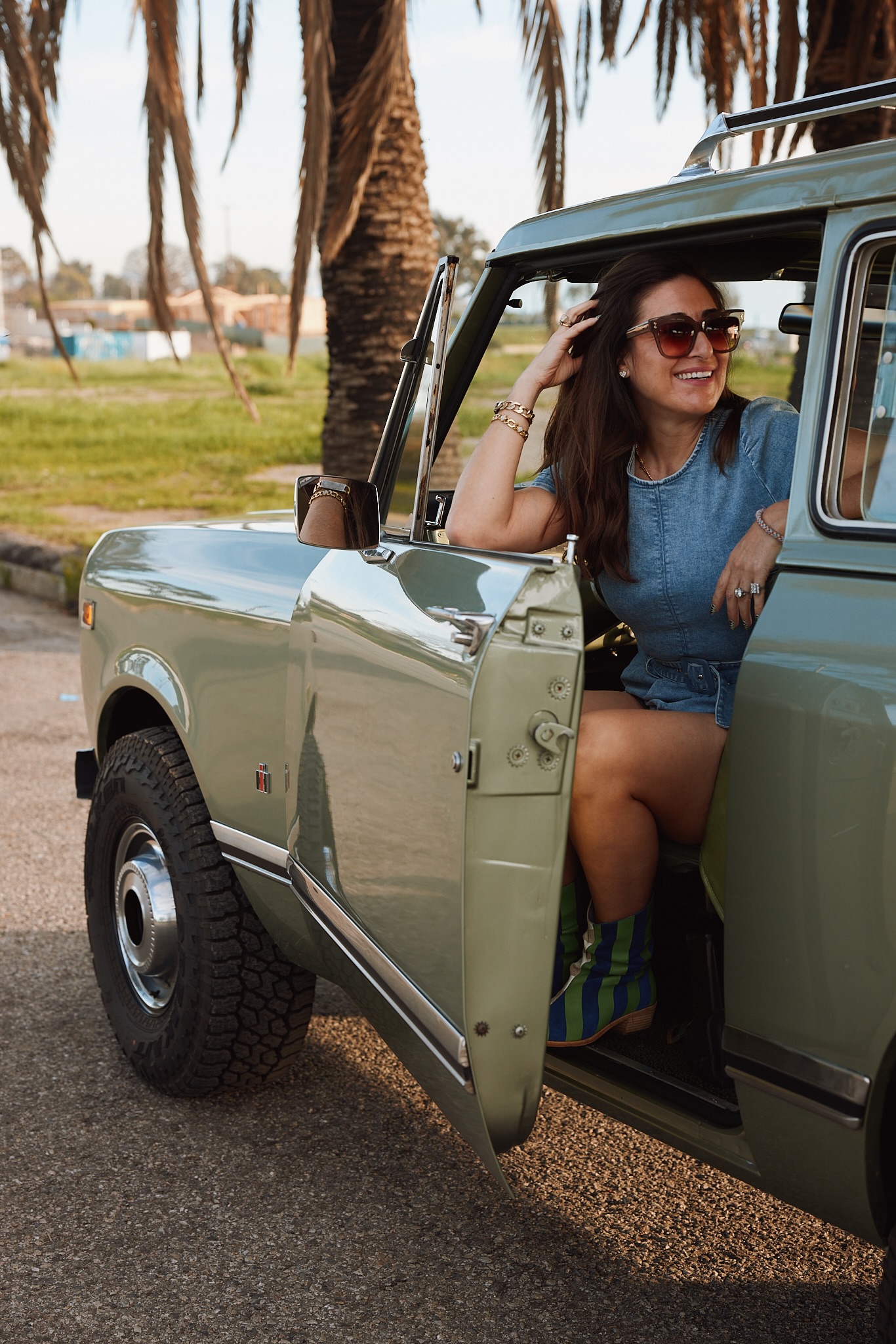
Today, the truck lives a quieter life than it once did—but no less meaningful. The Scout II is now brought out intentionally. Carefully. It’s stored safely, protected from the elements, and preserved as both heirloom and living object. And that’s the beauty of it, when a Scout rig becomes more than just a truck.
When Veronica drives it, the reactions are immediate. People stop, smile, and ask questions. Many Scout vehicle drivers are used to this. Some people recognize the truck instantly; others don’t, but they know they’re looking at something rare.
The truck fits Vern’s life now in unexpected ways. Often it’s parked outside familiar stores, coffee shops, city streets, or historic hotels—places she’d visit in her childhood. It perfectly bridges past and present. It carries her father’s memory without freezing her in it. Sometimes she practices the quite ritual of wearing her father’s watch when she drives it. A private, tactile connection, helping relive the “good ‘ol days.”
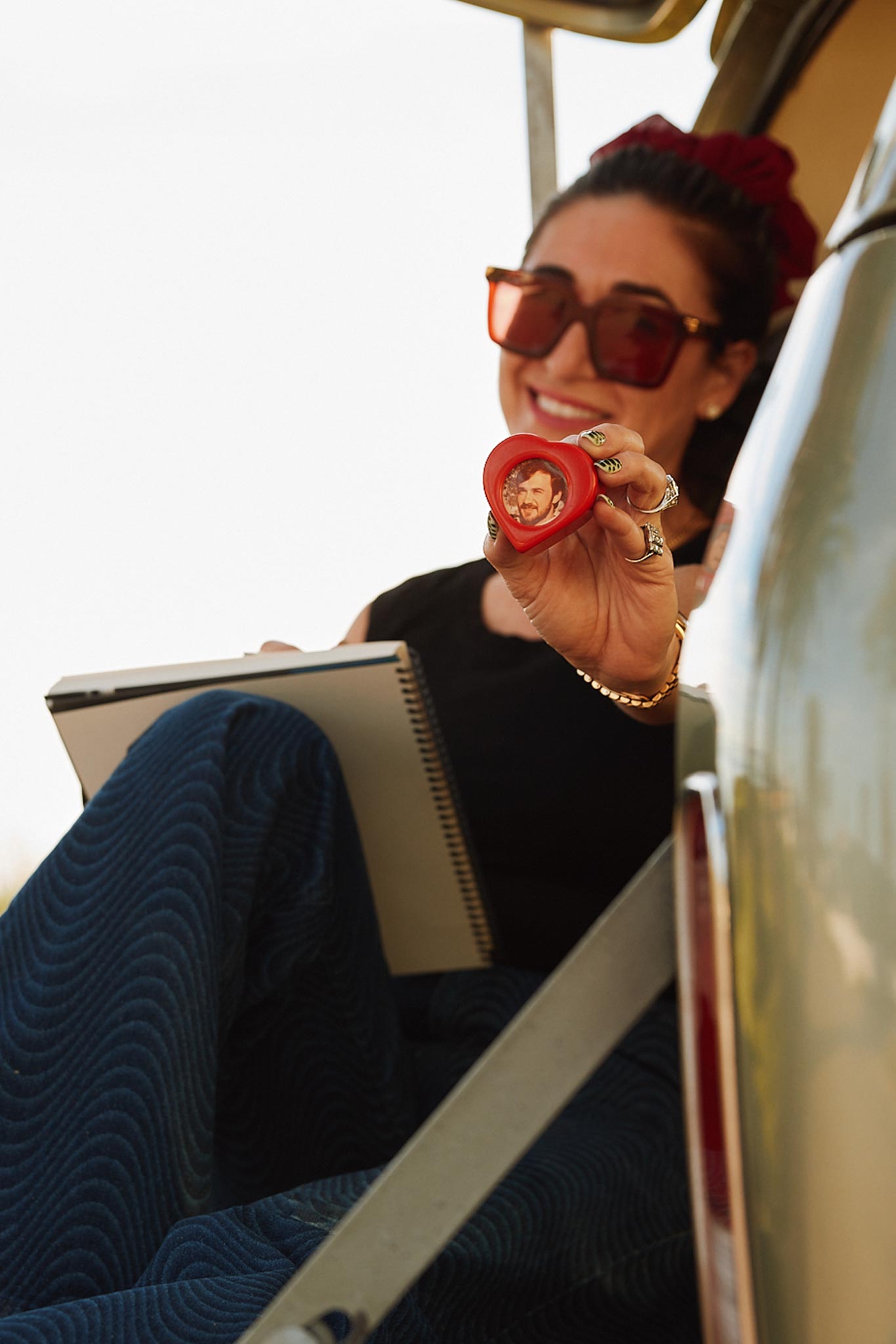
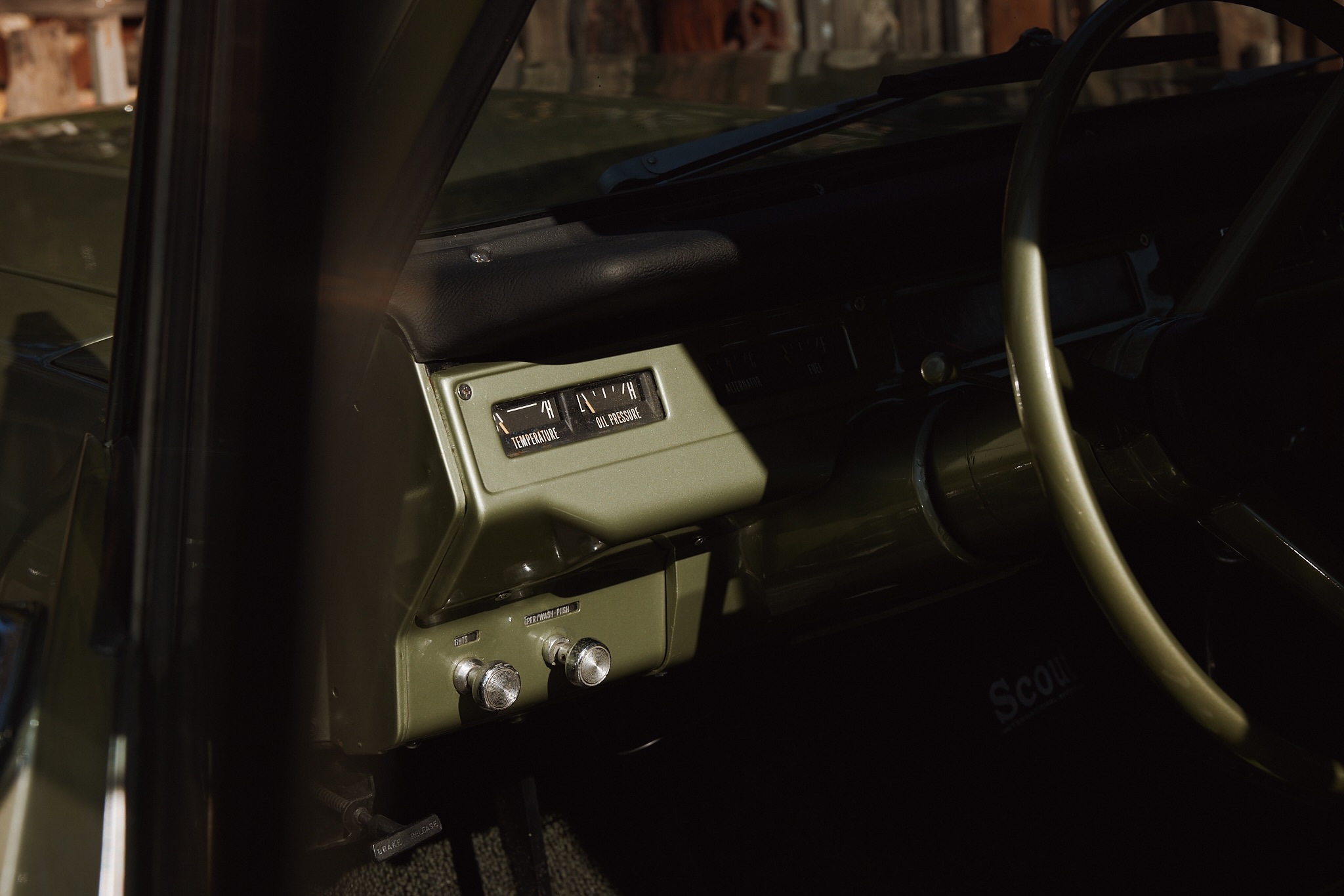
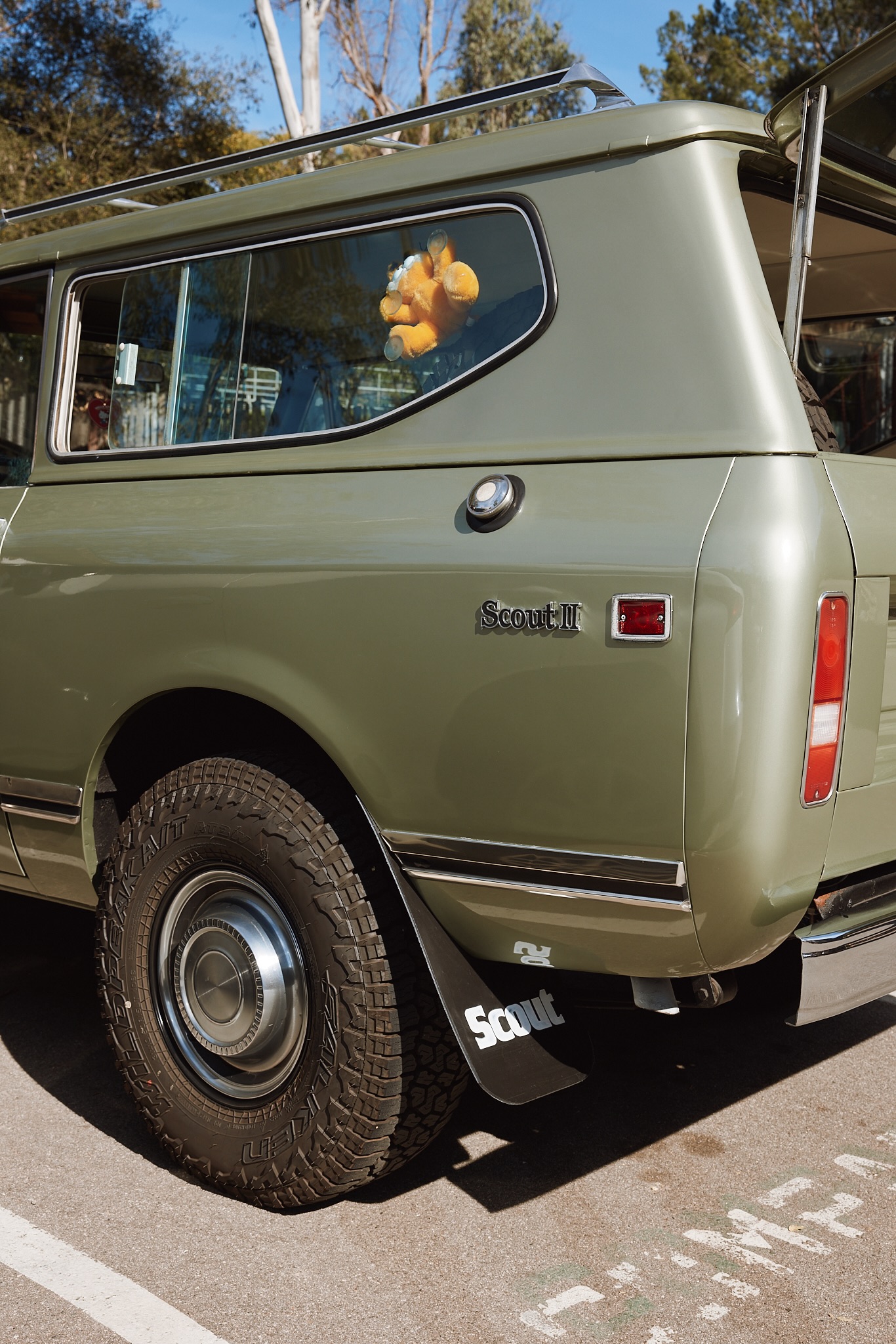
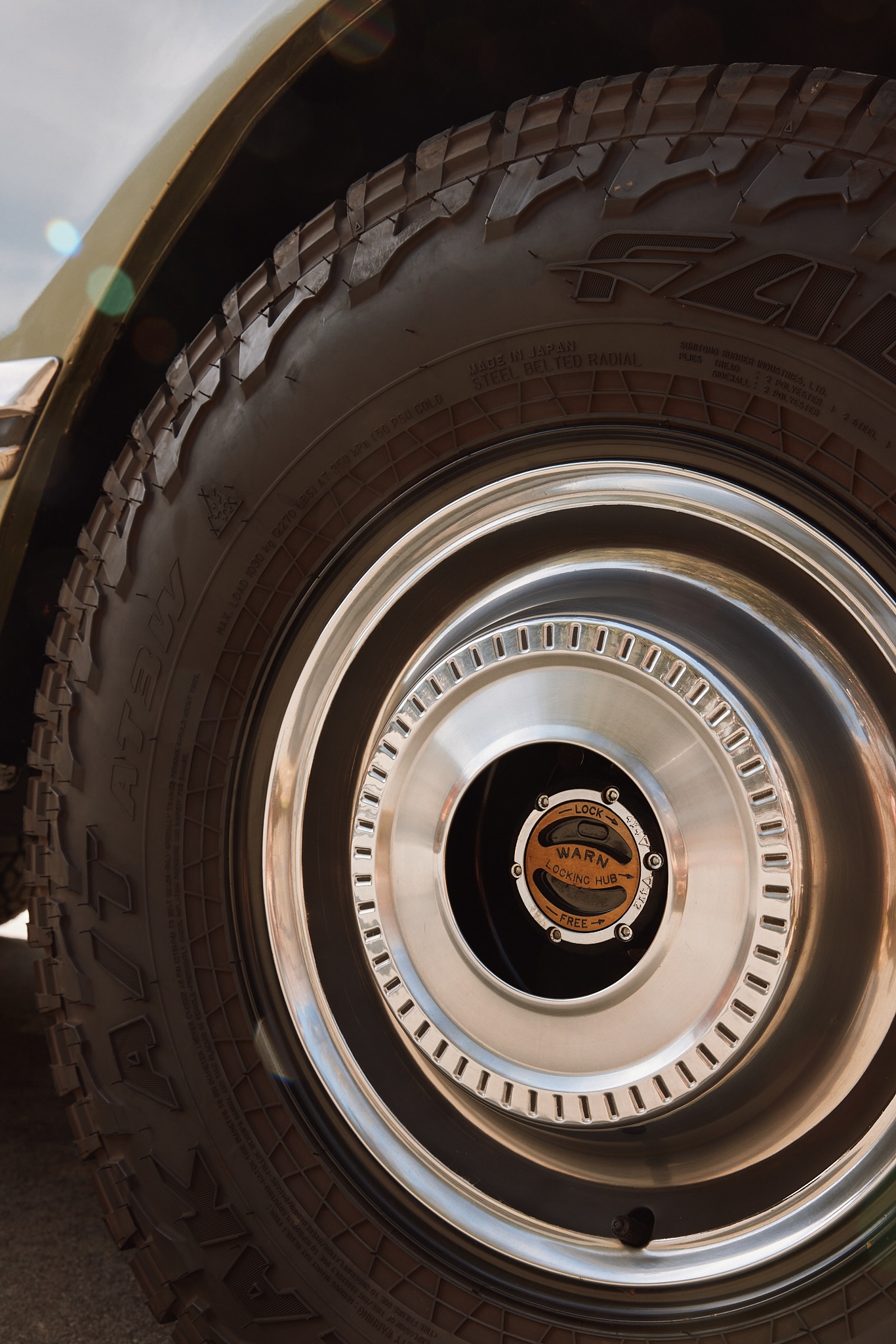
If she’s not running around town in the Scout II, Vern can be found at car shows. Now finally getting to be the person she once watched from afar: the proud owner standing beside her vehicle, telling its story to anyone willing to listen. Not for attention, but simply for the care, the lineage, and the preservation of the memories made by way of her Scout truck. For Veronica, the truck was never just transportation. It was a family member, a keeper of moments that can’t be replicated, only carried forward.
And that’s the thing about Scout vehicles. You either know what they are, or you don’t. And if you do, you probably have a story that starts the same way hers does—with a memory.
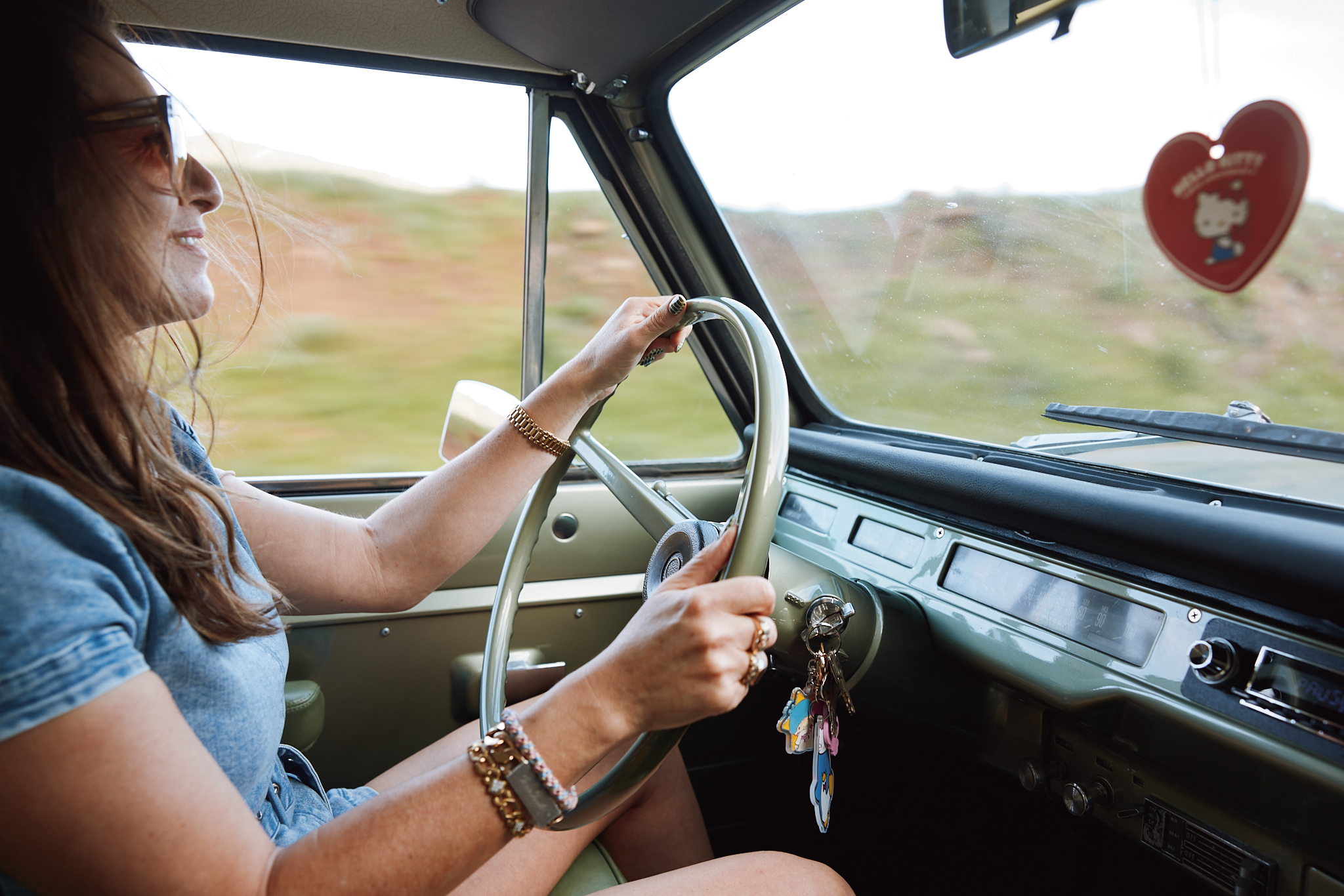
Scout, Scout II, and related marks are trademarks of Scout Motors Inc. or its affiliates. Any mention of third-party shops, restorers, or vendors is descriptive only and does not constitute an endorsement by Scout Motors Inc.
References to heritage Scout vehicles are for historical and storytelling purposes only. Heritage Scout models are no longer manufactured, sold, or serviced by Scout Motors Inc.

Reserve your spot now.
If you like the look of the Traveler SUV or Terra truck, secure your place on our waitlist now. Reserve your spot with a $100 fee, which is refundable until your order is confirmed.